Swimming: co-ordinated breathing – breaststroke

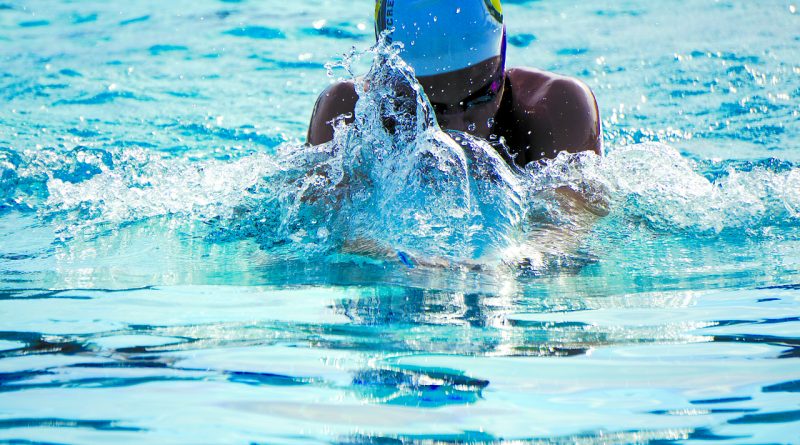
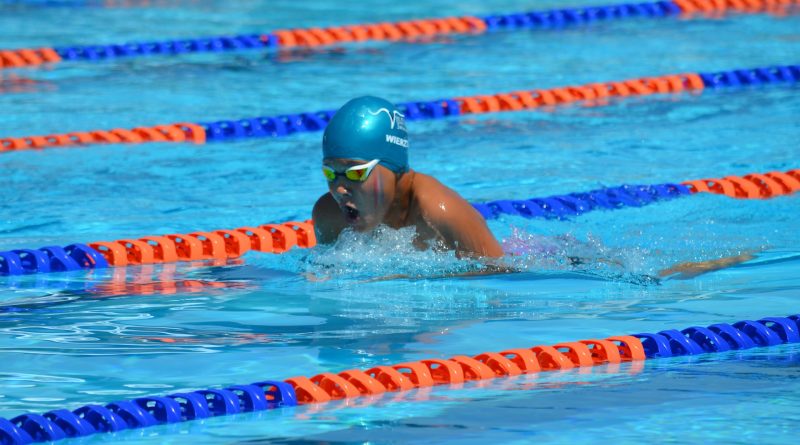
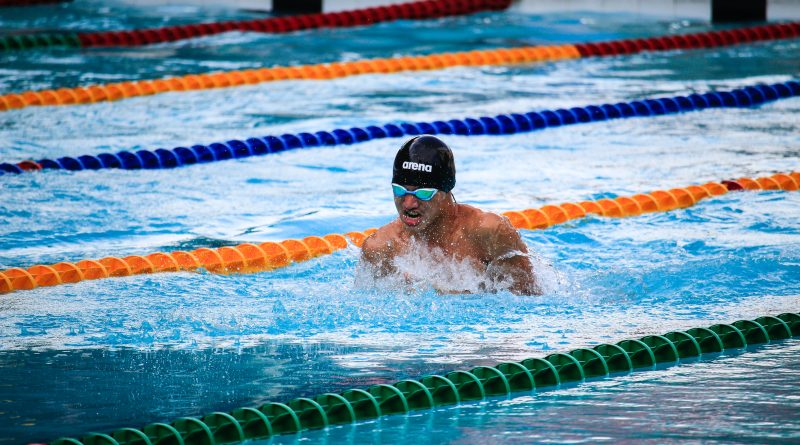
In the breaststroke, exhalation takes place as you release into the glide. Extending the arms forward exerts pressure on the diaphragm, naturally encouraging the expulsion of air from the lungs. Similarly, raising the body up and bringing the arms round encourages the opening up of the chest and lungs, thus promoting an unforced inhalation. Assuming that sufficient air has been expelled during the glide, air will flow in to the lungs without extra effort.

Standing up, bring your arms up to shoulder height and open them wide to either side. Think of the movement as starting from the back and shoulders and then traveling into the arms and hands. Notice how, as your arms open, there is a natural inclination to inhale. Now close your arms, bringing your hands together, and notice how it feels more comfortable to exhale as you do so.

Due to the pressure of water (hydrostatic pressure), breathing out into water requires slightly more force and takes longer than exhalation into air. A leisurely glide in the breast stroke should allow enough time to release sufficient air from the lungs for a comfortable inhalation to take place in turn. It’s a common error to suppose that one needs to fill one’s lungs to capacity with each inhalation or to breathe out every last drop of air. This is a recipe for anxiety and tension.

The length of time you choose to take in the glide will indicate the speed at which the breath needs to be exhaled. A faster rhythm of the stroke will require a shorter, more forceful exhalation. So when we accelerate our arm movements for the sake of speed, thereby encouraging repeated inhalation with every pull, problems arise because there’s not enough time to exhale sufficiently in the short periods when the arms are in the forward position. The repeated pulling back of the arms without sufficient intermediate pause can create a tendency to hyperventilate, which is a common reason for breathlessness and discomfort in the breast stroke.

Discover your optimum rhythms by trying out glides for different lengths of time. You can set a rhythm for yourself in advance by counting, say, to a slow beat of four. Think ‘glide’ to the count of three, and ‘up’ on the fourth. Explore this first on land and then standing in shallow water: as you extend your hands forward, bow your head and shoulders and exhale into the water. Exhale counting three beats while your hands stay together ahead of you, and come up to breathe on the fourth count.

A common fault is to leave the head in the water too long before pulling it back hastily to snatch a breath. It is much more comfortable to allow the head to rise as an integrated part of the torso when your arms open and draw back. The pace of rhythm needs to be adapted depending on how fast you swim. Ultimately, the exact rhythm of breathing will depend on all sorts of factors: your weight, height, speed, orientation, or just the way you choose to swim at the time.

Finding your feet and aspects of balance in the water

Try the following set of maneuvers for recovering your footing in the shallow end of a pool. This procedure is particularly important for beginners and those who lack confidence in recovering an upright position in shallow water after a glide.

Breathing presents a challenge to maintaining good orientation in the water. If we were able, like seals or dolphins, to submerge ourselves for extended periods without breathing, it might be- easier to maintain a balanced head-neck-back relationship. But we need to inhale through our nose or mouth more regularly. Because this means our face must surface above the water, learning to incorporate it into our stroke without interfering with good orientation is an important aspect of the art of swimming. Attempts are often made to side-step this problem.

Medical professionals, even while recommending swimming for health, sometimes advise against swimming breaststroke or front crawl for this reason. But the backstroke has its own complexities for maintaining good orientation. Some people think snorkels are the answer, but that merely limits the possibilities of the swimmer’s art. In fact, it’s far more rewarding to meet the challenge creatively, and thereby to expand rather than curtail your experience of swimming. There’s great pleasure in discovering that it’s possible to swim all the strokes and breathe well, without the use of props.

Good orientation in the water requires a continuous, flowing sense of balance. As we use our limbs to propel us through the water, the point of balance changes constantly. Holding the head in a fixed position interferes with this dynamic process. The point of balance at any one time depends on the relative positions of the various parts of the body, which are constantly changing as we move. One of” the keys to discovering the art of swimming is a keen awareness of the delicate balance of our bodies in the water. Such awareness provides the basis for ease and grace of movement, the distinguishing mark of the accomplished swimmer.

The body has a natural symmetry. Its weight is more or less equally distributed on either side of the spine. When we swim, the use of our limbs can either impede or assist the maintenance of our natural balance. If we pull harder with one arm without noticing it, we not only affect our ability to swim in a straight line, but disturb our overall poise. Similarly, uneven or uncoordinated use of the legs, which can be observed in swimmers who exhibit a ’screw-kick’ in the breast stroke, reduces our control of how we move through the water.

In addition to these aspects of lateral balance, our body needs to find a dynamic equilibrium along its length. As with a see-saw, the weight of the head acts as an effective counterpoise to the downward pressure of the pelvic area. If we let go of our neck muscles when we lie face down on the water, our head naturally tends forward under its own weight. Rather than resist this tendency, we should learn to allow it to work in our favor when we swim.

Technical aids and accessories of swimming

Because a sense of ease in the water is so essential to the art of swimming, equipment that helps to promote this is a worthwhile investment. Adults who have difficulty putting their face in the water for any length of time can find good-quality swimming accessories invaluable. As the majority of swimming-pools use chlorine as a disinfectant (and even lakes and oceans may contain eye irritants), the eyes are likely to sting if they stay open underwater for long periods. To help prevent this, there’s no substitute for a pair of good, well-fitting goggles. Without them, many swimmers will prefer to close their eyes the majority of the time. This not only increases the risk of bumping into things such as walls, lane ropes and other swimmers, but more importantly it contributes to a feeling of nervousness and of being in an alien environment. This is particularly true for swimmers who have poor eyesight to begin with. Straining one’s eyes to see the end of a pool or to avoid obstacles is not conducive to feeling at home in the water.

For some swimmers, goggles feel uncomfortably tight or constricting and seem to leak and fog up constantly. In the box below are suggestions for ways of overcoming such concerns. Today there are hundreds of different makes of goggles on the market, and it’s worth getting a pair that offers maximum effectiveness with minimum discomfort. If necessary, they can be ordered with lenses made to your prescription. Overleaf are some points worth noting about goggles.

Apart from goggles, a number of accessories are widely available to help swimmers deal with their concerns. It’s worth considering anything that serves to prevent distraction, difficulty, or genuine discomfort. A swimming cap is a boon for swimmers with long hair, and may be useful to prevent waterlogged hair flopping over the eyes and mouth. Although you may have to accept that they are uncomfortable and not always totally effective in keeping the hair dry, their main purpose is to keep hair out of your face so that you can attend to your swimming. Watertight ear-plugs are helpful for swimmers prone to ear infections or who suffer earache when the head is underwater. However, they can add to a sense of isolation in the water.

Similarly, nose-clips are not recommended unless you have specific sinus problems, because they’re likely to prevent you learning the appropriate ways of breathing when you swim. For hair and skin, shampoos and gels are widely available to neutralize chemicals and remove the smell of chlorine.

For children (and sometimes for adults), floats and armbands are commonly used accessories. But it is worth pausing before assuming that these are helpful for learning to swim. Above all, they can interfere with learners developing a sense of their natural buoyancy, the keystone of confidence in the water. While they may sometimes be considered essential for safety requirements, they should therefore be used only sparingly, if at all, in the context of children learning to swim under proper instruction.

Swimming – tips of fitness can damage your health

There is a Law of Reversed Effort. The harder we try with the conscious will to do something, the less we shall succeed. Proficiency and the results of proficiency come only to those who have learned the paradoxical art of doing and not doing. Aldus Huxley

A common feature of the case histories is the emphasis on trying to achieve, the sort of end-gaining that invariably accompanies the unthinking pursuit of fitness. We must be careful not to apply the same sort of trying to the task of learning a new approach, thus replacing one form of end-gaining with another. Alexander found that when pupils try to do the ‘right thing’ they are inclined to apply the wrong sort of effort to the task, which actually prevents them from performing it efficiently. In his Notes of Instruction we read: ‘I don’t want you to give a damn if you’re right or not. Directly you don’t care if you’re right or not the impeding obstacle is gone.’ Swimmers who try to ‘do it the right way’ create tensions which serve only to restrict their movements in the water. The anxiety aroused by trying to do the right thing is itself detrimental to awareness. The Alexander Technique shifts the emphasis away from trying to do the right thing to learning to prevent the wrong.

Learning the art of swimming involves discovering how to control the body’s natural buoyancy and make it work for you. As the body has a lower density than water, it will almost always float unless something is done to prevent it. Many adult beginners are reluctant to let the water support them, and may think that if they do nothing they will immediately sink to the bottom. Although there are individual physical differences which make it easier for some people to float than others, the main obstacle to floating is the false notion that the body must actively be held up in the water. The idea of non-doing also applies in another way. Swimming efficiently involves using the least effort to overcome resistance from the water. Applying too much effort increases friction and turbulence. Studies of Olympic swimmers have shown that the fastest swimmers are the ones who take the fewest strokes to cover the distance. What counts is not the amount of effort, but the appropriate use of effort. It can be interesting to see how few strokes you need to take to swim a given distance without loss of momentum.

The principle of non-doing was crucial to Helen’s recognition that thrashing about wouldn’t help her learn to float, let alone swim. Non-doing is not the same as passivity or total inactivity. It’s simply the result of a conscious decision not to respond in a habitual way. The Alexander Technique sets out to teach us how to consciously undo undesirable responses. A non-doing approach to swimming can work wonders both for the beginner and the more advanced swimmer. The less one does to hinder oneself, the easier it becomes to move through the water. This results in a truer approach to fitness which avoids the strain imposed by trying to attain inappropriate preconceived goals. A step-by-step, experimental approach allows swimmers to change their unthinking or automatic responses both in and out of the water.

Most of us act from unrecognized assumptions about which we have a natural tendency to deceive both ourselves and others. Detecting some of the specific mental blocks which get in the way of swimming freely can be difficult.

Exploring swimming orientation – backstroke

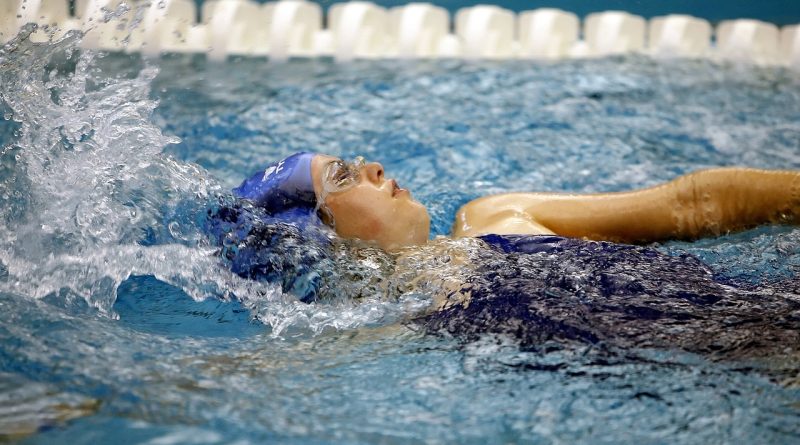
When performed correctly, backstroke can be the most elegant and relaxed-looking of all the strokes. However, if a good head-neck-back relationship is not maintained, it becomes disorganized and awkward. Some swimmers pull their head right back so that their eyes are focused on a point behind them, which can cause the back to arch unduly and water to spill over the face. Others crane their heads forward too far in an attempt to hold their face out of the water. This compresses the chest and puts a strain on the neck muscles.

Backstroke is performed with a regular arm action combined with a steady leg-kick. The head and spine should remain centered, while the hips and shoulders constantly rotate, requiring a free-flowing mobility of the hip and shoulder joints. The legs do not simply kick up and down at right angles to the water surface. During the stroke they will mainly be angled to one side or the other, following the angle of the torso and lower body. The alternating arm-pull required for propulsion creates continuous alterations in the body’s lateral balance.

Controlling body-roll helps to preserve balance and freedom. Maintaining good orientation is the means whereby this can be achieved.

Practice the backstroke initially in three stages, to explore the optimum release of the neck-muscles during its performance.

1. Push off from the poolside on your back, hands resting by your side. Your body should be slightly angled to one side. Release your neck-muscles, letting your ears submerge, and discover how effectively the water can support your head if you allow it to. Experiment with minor changes in the angle of your neck to see how they can affect the way you float, noticing how holding up the head requires more effort than releasing the neck-muscles.

2. Perform the same procedure with one hand gently supporting the back of your neck. With your hand feel the tone of the muscles in your neck as you experiment with different angles.

3. Perform the procedure this time with one arm extended behind you as you glide. Notice how much easier it is to float with the weight of the arm helping to balance the body along its length. Does this position have any effect on the sensation of release in your neck-muscles?

Unlike the breaststroke, backstroke requires taking the arms out of the water and placing them back in. This is a process requiring fine control and unless performed with awareness and skill can have detrimental repercussions for orientation. The temptation is to arch the back. If we hold our arms stiffly or apply undue force, muscles become taut throughout the body. If the neck in particular is not relaxed, the head will tend to follow the movement of the arm round into the water, pulled both backward and from side to side by the powerful trapeziums muscle which connects the neck, shoulders and back. If the backward movement is too extreme, we risk water splashing over our faces. If the sideways movement is exaggerated, we increase resistance to our passage through the water and may disrupt the rhythm of our stroke.

Explore how well you can control the entry of your hand into the water. While neck and arm muscles should remain as relaxed as possible, the hand should be carefully directed into the water, little finger leading. This requires a rotation of the shoulders and a looseness of the neck to allow the head to move smoothly on its axis.

Orientation in the backstroke demonstrates the importance of the sculling action which characterizes most forms of propulsion in the water. Sculling means pushing sideways towards the body with hand and forearm so as to propel oneself forwards on one’s front or backwards on the back. After the arm enters the water, the elbow should drop so that halfway through the underwater phase the forearm can commence to scull. To do this requires a relaxed flexion of the elbow: a rigid arm cannot scull effectively. Furthermore, if the arms flail like windmills or propeller-blades, their very rigidity will cause the strain and imbalance in the stroke that has been described.

« Previous Entries